

Conference: “The Implementation of the New Insolvency Regulation – Improving Cooperation and Mutual Trust”
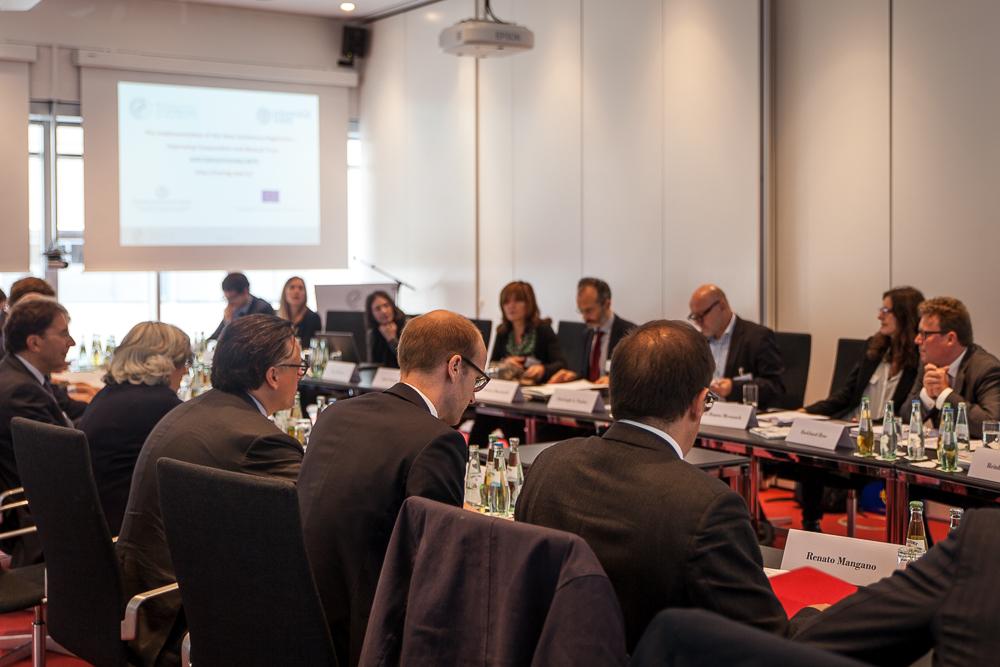
On 7 October 2016, the final conference of the research project “The Implementation of the New Insolvency Regulation – Improving Cooperation and Mutual Trust” was held at the premises of the MPI Luxembourg. The project, which is co-funded by the European Commission, is a collaboration between the MPI Luxembourg and the Universities of Milan and Vienna. It aims to analyse the imminent changes to the European Insolvency Regulation and to provide guidelines for practitioners and national lawmakers on how to implement these changes.
For this purpose, leading academics and practitioners from many different Member States discussed and commented on the preliminary recommendations provided by the research partners, covering the three major areas, in which the new EIR will advance European Insolvency Law from its entry into force on 26 June, 2017:
1. The insolvencies of groups of companies, in particular the determination of the COMI of a member of a group of companies and the new group coordination proceeding.
2. The scope of application of the regulation, in particular the addition of pre-insolvency and hybrid proceedings.
3. The coordination of main and secondary proceedings and the inclusion of the – so called – synthetic proceedings as a tool to prevent the opening of secondary proceedings.
While the participants generally welcomed the lawmakers’ willingness to reform, many of the individual changes were received critically. For instance: the relative position of the “group coordinator” and in particular his lack of authority are considered to divest the new group coordination proceeding (Articles 61 et seq. EIR-R) of any real assertiveness; the continued exclusion of scheme of arrangements from the Regulations scope of application (Article 1 EIR-R, Annex A) is opposed by many continental stakeholders and the overly complicated rules governing synthetic proceedings (Articles 36 et seq. EIR-R) are found to be a potential hindrance to the instruments’ practical application.
The detailed results of the conference and of the project as a whole will be published in 2017.


